


Introduction
Water filtration systems are used across homes, offices, factories, hospitals, and large industrial water treatment facilities. Many people focus only on the filter cartridge, assuming it performs all the critical filtration work. In reality, cartridge performance depends heavily on the quality and strength of the filter housing that supports it.
Filter housing functions as the central support element within a water filtration system, providing stability, protection, and reliable operation. Just as the human body cannot function without a strong backbone, a filtration system cannot perform effectively without durable housing.
An excellent filter cartridge becomes worthless when water seeps into the unit, damages the cartridge, or lets contaminants bypass the media. Housings operate in the background to maintain pressure and seal integrity while protecting cartridges against mechanical stresses.
Why Choosing the Right Housing Matters
Filter housing receives minimal attention, yet its direct effect on safety, efficiency, and system durability is significant. Incorrect housing selection is like placing high-performance tires on an unsteady chassis — the system eventually breaks down.
A well-selected filter housing protects:
- Seal integrity and leak prevention
- Working pressure and structural stability
- Cartridge alignment and media effectiveness
- Uniform flow distribution through the media
- Long-term durability under operating conditions
- Safety in residential, commercial, and industrial use

From point-of-entry home systems to manufacturing and pharmaceutical plants, the housing is what keeps filtration predictable when pressure, chemicals, and continuous duty are part of daily operation.
How Long Does Filter Housing Last?
With approved maintenance, filter housing can deliver many years of performance. Longevity depends on material choice, operating pressure, temperature, chemical exposure, and how carefully the unit is installed and inspected.
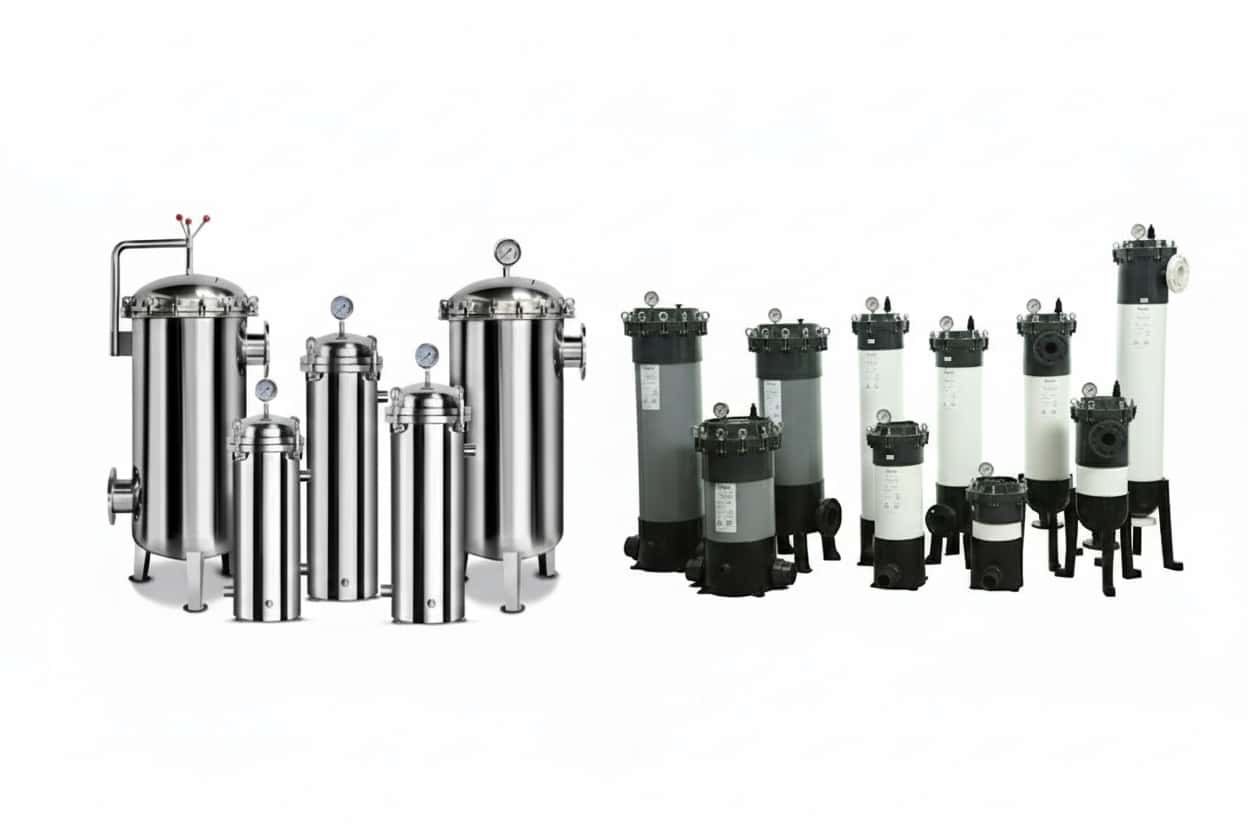
PVC and UPVC housings suit many residential and light commercial water treatment applications where corrosion resistance and lightweight installation matter. Stainless steel housings are chosen when high temperature, high pressure, and hygiene demands are the priority. Replacement becomes necessary when the housing is damaged or has been used beyond its specified conditions.
5 Signs Your Filter Housing Needs Attention
Leakage Around Seals or Closures
O-rings, clamps, and locking systems exist to prevent leaks and maintain pressure resistance. Persistent seepage or bubbling around closures suggests the seal is no longer holding dimension accuracy or reliable closure.
Water Bypass Around the Cartridge
A deficient seal permits water to fly past the cartridge so contaminants infiltrate unfiltered. When purified outlet quality slips despite a fresh cartridge, housing seal or fitment issues are a likely cause.
Cracking, Deformation, or Pressure Failure
Weak housings crack, deform, and fail under pressure. That risk rises when a unit is undersized for system pressure or made from material that cannot handle the duty.
Poor Cartridge Fit and Sealing
Without a perfect cartridge installation match, leakage through system seals continues. Size and type compatibility between housing and cartridge are required for edge seal and flow performance.
Material Breakdown from Chemicals or Heat
Materials that fail to resist chemicals and heat decompose progressively under operating conditions. Softening, discoloration, or loss of structural stiffness are signs the housing no longer matches the process environment.
Maintenance and What Housing Care Can (and Cannot) Fix
Routine inspection and correct installation keep housings performing. Knowing what service can restore — and what requires replacement — avoids costly downtime.

Proper care and maintenance can address
- Seal and O-ring wear when closures are still within specification
- Misalignment corrected by proper installation and pressure testing
- Cartridge replacement with pull-to-open designs that speed service
- Routine inspection findings before leaks become failures

Maintenance cannot fix
- Cracked or deformed housings that have failed under pressure
- Materials that have decomposed from chemical or heat exposure
- Housings used past specified pressure, temperature, or duty conditions
- Incompatible cartridge size or type that never seals correctly
A budget housing that fails today can become high repair costs and production stoppages tomorrow — especially in manufacturing, food, beverage, and pharmaceutical environments.
Getting More Life Out of Your Filter Housing
Housing lifespan stretches when selection, installation, and upkeep match the real operating conditions:
- Match pressure and flow ratesso the housing supports system pressure without starving flow or endangering safety
- Choose cartridge fit and sealing carefully— compatible size and type prevent bypass and leaks
- Select for chemical and temperature resistancebased on PVC/UPVC or stainless steel suitability for the duty
- Install with correct alignment, sealing, and pressure testingfor long-term performance
- Inspect routinelyto catch leaks early and maintain system life expectancy

Good housing selection and maintenance protect cartridges, flow, and the wider filtration system — not just the vessel itself.
Frequently Asked Questions
It forces water through the filtration media while holding cartridges securely and avoiding leaks or unfiltered bypass of water.
System requirements determine material choice by pressure levels, operating temperature, and chemical exposure. PVC performs well in basic water systems, while stainless steel suits industrial needs such as food processing, pharmaceuticals, and oil & gas.
No. You need compatible cartridge types with defined size to match every housing for optimal edge seal and flow performance.
Approved maintenance extends housing longevity through many years of performance. Replacement becomes necessary for damage sustained or extended use past specified conditions.
Single-cartridge housings suit small residential and commercial setups; multi-cartridge housings support higher flow in industrial plants; bag filter housings are used for high-flow pre-filtration with simpler maintenance.
Conclusion
Filter housing is a fundamental element of reliable water filtration systems. It manages pressure, preserves seals, distributes flow evenly through the cartridge, and protects performance from residential point-of-entry setups to demanding industrial environments.
Aqua Flair Trading LLC supplies durable filter housings — including single and multi-cartridge options in PVC, UPVC, and stainless steel — with sizing help, system integration support, and after-sales assistance across diverse water treatment applications.
Share this story


