


Introduction
As water treatment technology continues to evolve, engineers, facility managers, and specialists are shifting toward systems that deliver greater efficiency, durability, and cost-effectiveness. Among the innovations reshaping the industry, FRP (Fiberglass Reinforced Plastic) pressure vessels have emerged as a preferred choice for advanced filtration and reverse osmosis systems.
Lightweight yet strong, FRP pressure vessels offer superior corrosion resistance, chemical stability, and longevity compared with traditional metal tanks. They suit residential, commercial, and industrial water treatment — especially in demanding UAE environments where high temperatures and salinity challenge metal equipment.
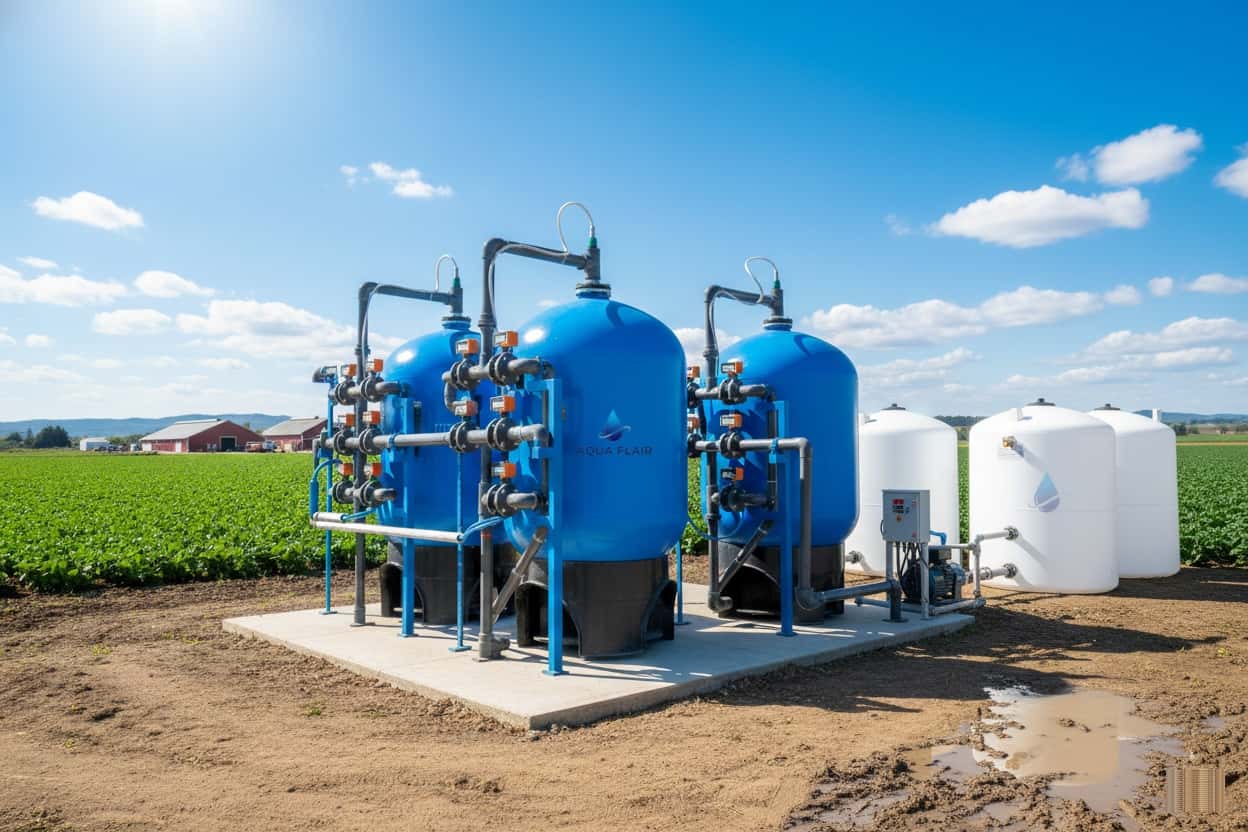
FRP vessels are composite containers built from high-strength fiberglass filaments and epoxy resin. In water treatment systems they house filtration media or membranes used in RO systems, water softeners, sand filters, carbon filters, and other purification processes.
Why FRP Matters for Modern Filtration Systems
Unlike stainless steel or mild steel tanks that can corrode, dent, or degrade, FRP vessels maintain structural integrity under constant exposure to chemically treated or saline water. In the UAE’s humidity, heat, and salinity, that advantage is operational — not cosmetic.
Switching to FRP pressure vessels protects:
- Corrosion resistance in saline and chlorinated water
- Chemical stability under treated process water
- Structural integrity under high operating pressure
- Lower installation load and labor versus steel
- Long service life with minimal maintenance
- Compatibility with trusted Clack control valves

From desalination plants and coastal installations to municipal systems and food, beverage, and hospitality operations, FRP supports consistent water quality while reducing costly replacements tied to metal corrosion.
How Long Do FRP Pressure Vessels Last?
With proper installation and maintenance, FRP vessels can last 15 to 20 years or more. Their corrosion-resistant design supports a long lifespan even in saline or chemically treated environments.
A smooth internal surface helps prevent scaling and fouling, so major upkeep is rarely needed compared with steel or polyethylene alternatives. That combination of lifespan and low maintenance underpins a strong return on investment for long-term infrastructure planning.
5 Signs Metal Vessels Are Holding Your System Back
Corrosion from Saline or Chlorinated Water
Metal tanks rust and degrade after years of contact with saline, chlorinated, or chemically treated water. FRP’s non-metallic composition does not rust, which is especially valuable for desalination plants, chemical industries, and coastal UAE sites.
Heavy Structural Load and Difficult Installation
Despite being up to 70% lighter than steel, FRP still offers high structural strength and pressure resistance. Persistent handling, transport, or rooftop load problems with steel are signals to evaluate lighter composite vessels.
Frequent Cleaning or Scaling Inside the Vessel
FRP vessels are designed to be virtually maintenance-free, with smooth internals that reduce scaling and fouling. If metal tanks demand constant cleaning or repairs, the material itself may be part of the problem.
Poor Valve Integration and Control Hassles
Aqua Flair’s FRP pressure vessels are fully compatible with Clack control valves for seamless operation, reliable control, and easier maintenance across filtration and softening systems. Awkward valve pairing is a cue to standardize on a compatible FRP platform.
Short Replacement Cycles Versus Expected Infrastructure Life
When steel vessels need replacement well before a 15-to-20-year planning horizon, total ownership cost rises. FRP’s longevity and lower maintenance are intended for operators focused on sustainability and uptime.
Maintenance Reality: What FRP Care Covers
FRP pressure vessels are low maintenance by design, but they are not a substitute for correct system operation. Knowing what care achieves — and what it cannot — keeps expectations clear.

Proper FRP use and light maintenance support
- Long-term corrosion immunity versus rusting metal tanks
- Reduced scaling and fouling thanks to smooth internal surfaces
- Reliable Clack valve control with straightforward operator maintenance
- Stable performance when vessels are correctly sized and installed

FRP vessels alone cannot fix
- Incorrect pretreatment or media selection upstream of the vessel
- Operating outside engineered pressure limits for the application
- Neglected inspections that miss early installation or sealing issues
- System designs that ignore feed salinity, chemistry, or duty cycle
Regular inspections are still recommended even when major upkeep is rarely needed — the vessel’s durability works best inside a well-designed filtration or RO train.
Getting More Life Out of Your FRP Pressure Vessels
FRP already starts with a long design life; good project choices stretch that advantage further:
- Specify certified vessels— NSF, CE, and ISO-certified FRP units validate safety, hygiene, pressure endurance, and material integrity
- Pair with Clack control valvesfor precise, durable, operator-friendly filtration and softening control
- Match size and configurationto RO, softener, sand, carbon, or multimedia duty and system capacity
- Use manufacturer warranty and technical supportfor consultation, installation guidance, and maintenance advice
- Plan for UAE conditions— heat, humidity, and salinity — where FRP’s corrosion resistance is most critical

Long lifespan, corrosion resistance, and lower ownership costs make FRP a logical choice for the next generation of water filtration infrastructure.
Frequently Asked Questions
FRP pressure vessels are used in reverse osmosis systems, filtration units, and water softeners. They hold filtration media or membranes that remove impurities from water under high pressure.
With proper installation and maintenance, FRP vessels can last 15 to 20 years or more. Their corrosion-resistant design supports a long lifespan even in saline or chemically treated environments.
FRP vessels are lighter, corrosion-resistant, and low maintenance compared with metal tanks that may rust or degrade over time. They also perform better in hot and humid regions like the UAE.
Yes. Aqua Flair Trading FRP vessels are fully compatible with Clack control valves, supporting smooth operation, precise control, and easy maintenance.
Aqua Flair Trading supplies NSF, CE, and ISO-certified FRP vessels, supporting compliance with global safety, performance, and hygiene standards.
Conclusion
FRP pressure vessels combine strength, safety, and sustainability for modern water filtration — from RO membrane housings and softeners to sand, carbon, and multimedia filters in residential, commercial, and industrial settings.
Aqua Flair Trading supplies NSF, CE, and ISO-certified FRP pressure vessels with Clack valve compatibility, manufacturer warranty, and local technical support across the UAE, helping projects run with less corrosion risk and longer service life.
Share this story


