


Introduction
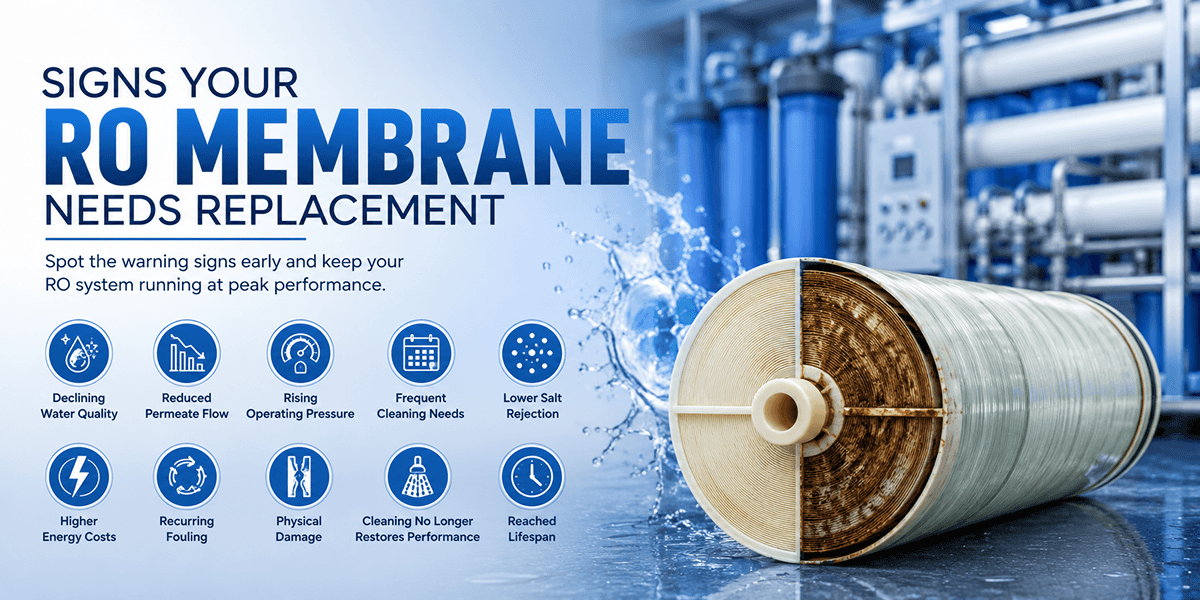
Every reverse osmosis (RO) system lives or dies by one part: the membrane. It's the component responsible for turning raw feed water into clean, usable output, and while a good RO membrane is built to perform for years, it's not built to last forever. Constant exposure to dissolved salts, minerals, suspended solids, and microorganisms wears it down gradually, until one day the numbers on your dashboard just don't add up anymore.
Plant operators ask the same question all the time: how do I know when it's time for RO membrane replacement? There's no single answer — a drop in output or water quality could point to fouling, scaling, an operating condition issue, or simply old age.
Replace too soon and you're burning budget on a part that had life left in it. Wait too long and you risk falling production, climbing energy bills, and water that no longer meets spec. Knowing the warning signs early lets you plan replacement on your terms instead of reacting to a breakdown.
Below we walk through the ten clearest indicators that an industrial RO membrane is nearing end of life, what causes premature wear, and how to stretch membrane lifespan as far as possible.
Why Timely Replacement Matters
The membrane determines how well your system rejects dissolved contaminants — which means it determines the quality of everything downstream. Once performance starts slipping, the whole system feels it: pressure creeps up, permeate flow drops, TDS rises, and the pump works harder for less output.
Replacing a membrane at the right moment protects:
- Consistent water quality
- Stable production capacity
- Lower day-to-day operating costs
- Energy efficiency
- Lifespan of pumps and downstream equipment
- Overall process reliability

For sectors where water purity isn't optional — food and beverage processing, pharmaceuticals, manufacturing, hospitality — staying ahead of membrane replacement is part of basic operational discipline.
How Long Does an RO Membrane Actually Last?
There's a common myth that every membrane has a fixed expiry date. In practice, a well-made membrane typically holds up for 2 to 3 years, but where a given unit lands in that range depends on feed water quality, how good your pretreatment is, operating pressure, cleaning habits, and general system upkeep.
Two identical membranes can age at very different rates depending on how well the system around them is run. That's why age alone isn't a reliable trigger — performance monitoring is.
10 Warning Signs You Shouldn't Ignore
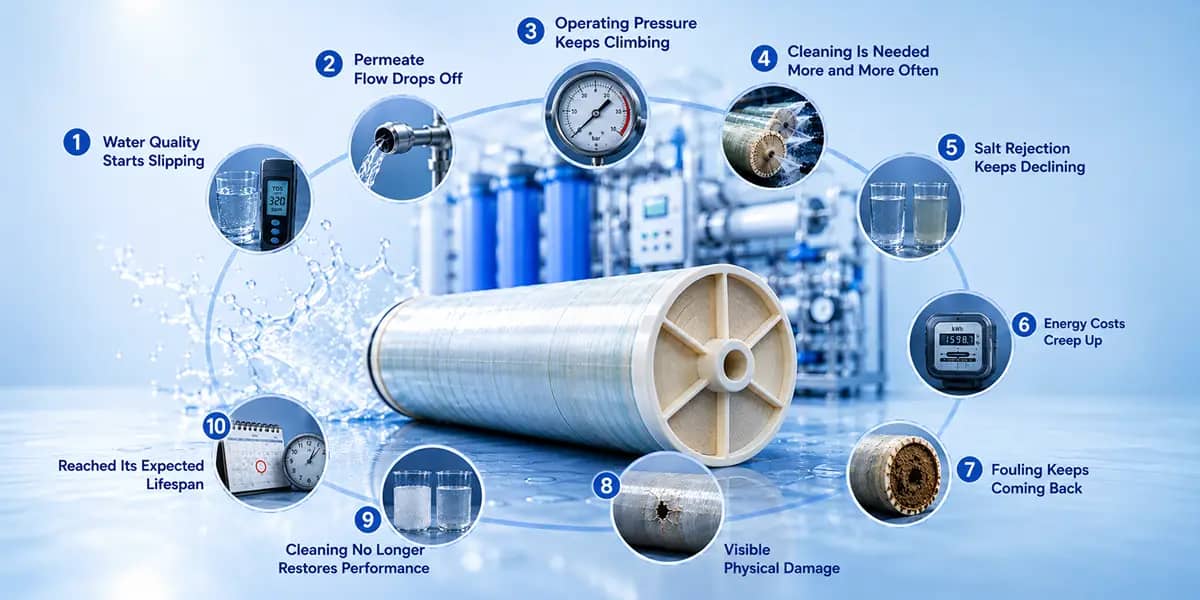
Water Quality Starts Slipping
A membrane's job is to reject dissolved salts at a high, consistent rate. As it ages or sustains damage, that rejection rate declines — showing up as rising TDS, higher conductivity, and product water that simply isn't as clean as it used to be. If a cleaning cycle doesn't bring rejection back, the membrane has likely reached its limit.
Permeate Flow Drops Off
When output falls even though feed pressure hasn't changed, that's a red flag: slower production, longer running times to hit the same volume, or a system that can't keep pace with demand. Fouling causes temporary dips, but a permanent decline usually means replacement.
Operating Pressure Keeps Climbing
Rising differential pressure across the membrane is one of the most dependable signs of fouling or wear. As contaminants build up on the surface, the system needs more force to keep production steady. If cleaning no longer brings pressure back to normal, replacement is the next step.
Cleaning Is Needed More and More Often
Routine chemical cleaning is normal maintenance — but if the interval between cleanings keeps shrinking without any real payoff, that signals irreversible wear. At some point a membrane that needs constant intervention costs more to keep than to replace.
Salt Rejection Keeps Declining
Consistent, ongoing loss of salt rejection usually points to age, chemical damage, oxidation, or surface breakdown — not something a cleaning cycle can fix. This directly threatens your ability to meet process water specifications.
Energy Costs Creep Up
Easy to miss, because it doesn't look like a water-quality problem. As a membrane fouls, scales, or ages, the system needs more pressure to hold the same flow — the pump works harder and pulls more power. Tracked over months, that extra expenditure can outweigh the cost of a new membrane.
Fouling Keeps Coming Back
Some fouling is expected over the life of any membrane. But when it reappears shortly after every cleaning cycle, the membrane has hit the limit of what cleaning can fix.
- Mineral scaling calcium carbonate, calcium sulfate, and silica building up on the surface
- Organic fouling oils and organic matter clogging membrane pores
- Biological fouling bacteria, algae, or biofilm, often linked to weak pretreatment
- Colloidal fouling fine suspended particles raising pressure drop over time
Visible Physical Damage
Not every failure is gradual. An inspection might turn up torn membrane sheets, cracked elements, damaged end caps, broken brine seals, or warped spacers — usually from pressure spikes, mishandling, chemical attack, or poor installation. Once there's structural damage, replacement is the only real option.
Cleaning No Longer Restores Performance
Often the clearest sign of all. If a professional cleaning cycle fails to improve production, salt rejection, or differential pressure, the membrane has aged past the point of recovery. Continuing to run it just adds cost while output keeps sliding.
It Has Simply Reached Its Expected Lifespan
Even a membrane that seems to be performing fine deserves attention once it approaches the 2-to-5-year mark. As it nears end of life, step up monitoring and plan a scheduled swap — a planned replacement is almost always cheaper than an unplanned shutdown.
Can Cleaning Save a Failing Membrane?
It depends entirely on the root cause.

Cleaning can fix
- Mineral scaling
- Organic fouling
- Biological contamination
- Colloidal buildup

Cleaning cannot fix
- Natural membrane ageing
- Chemical oxidation
- Mechanical or structural damage
- Torn membrane sheets
- Permanent rejection loss
Knowing which category you're dealing with saves you from spending on cleanings that were never going to solve the problem.
Getting More Life Out of Your Membrane
Every membrane eventually needs replacing, but good operating practices can push that timeline out considerably:
- Invest in real pretreatmentto strip out suspended solids, chlorine, and other stressors before they reach the membrane
- Track performance data— TDS, conductivity, rejection rate — so problems surface early
- Clean based on data, not the calendar
- Stay within the manufacturer's pressure range
- Dose antiscalants correctlyto keep mineral scaling in check
- Follow the manufacturer's operating guidelinesto the letter

Preventive care is consistently cheaper than emergency replacement.
Frequently Asked Questions
Most industrial membranes last about 2 to 3 years, but feed water quality, pretreatment, pressure, and cleaning discipline can shorten or extend that window. Performance data is a better trigger than calendar age alone.
Yes. Rejection loss, rising differential pressure, and recurring fouling often appear before any torn sheet or cracked end cap is obvious on inspection.
Not always. Pretreatment issues, pump problems, scaling elsewhere in the system, or incorrect operating setpoints can also cut permeate flow. Confirm membrane health with rejection and pressure trends.
Cleaning can reverse recoverable fouling and scaling. It will not restore a membrane that has aged chemically, oxidized, or suffered structural damage.
Expect weaker product quality, higher energy use, more frequent cleaning, and greater risk of unplanned downtime — usually costing more than a planned replacement.
Conclusion
Catching the signs of a failing RO membrane early is what keeps water quality consistent, protects your equipment, and controls long-term operating costs. Falling permeate flow, rising pressure, weaker salt rejection, more frequent cleaning, higher energy use, and recurring fouling are all signals worth acting on.
Good pretreatment and disciplined maintenance can extend a membrane's working life significantly, but every membrane eventually reaches its limit. Aqua Flair Trading LLC supplies industrial RO membranes, replacement parts, and complete water treatment solutions across the UAE and GCC region.
Share this story


